Fear of diagnosis
Patients may avoid preventive care because they are afraid of what they might discover.
Core Insight
The Opportunity
Yet the transition between those two moments is where many patients disengage. The design brief highlighted fragmented care, low benefit awareness, and emotional barriers after discharge.
Structured clinical support
Responsibility shifts
Support becomes fragmented
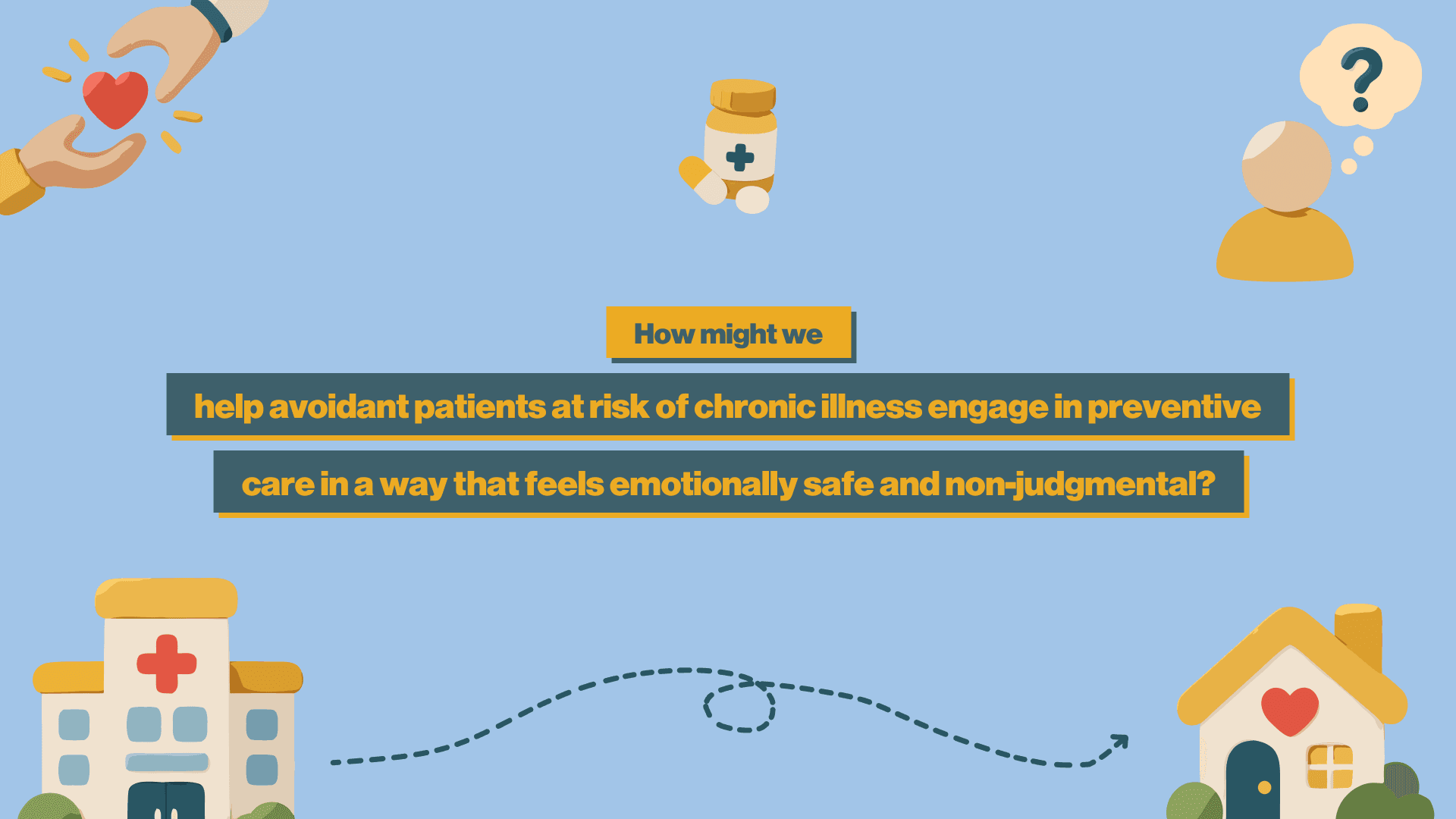
Understanding the Problem
Patients often already know that healthier behaviour matters. The difficulty begins when responsibility shifts from clinicians to patients and the system expects immediate confidence, clarity, and action.
Design Principles
Trust comes before compliance.
Patients should not have to decode insurance during an emotional crisis.
Technology should amplify human support rather than replace it.
Small wins create sustainable behaviour change.
Care should continue beyond hospital discharge.
Why ThriveBridge?
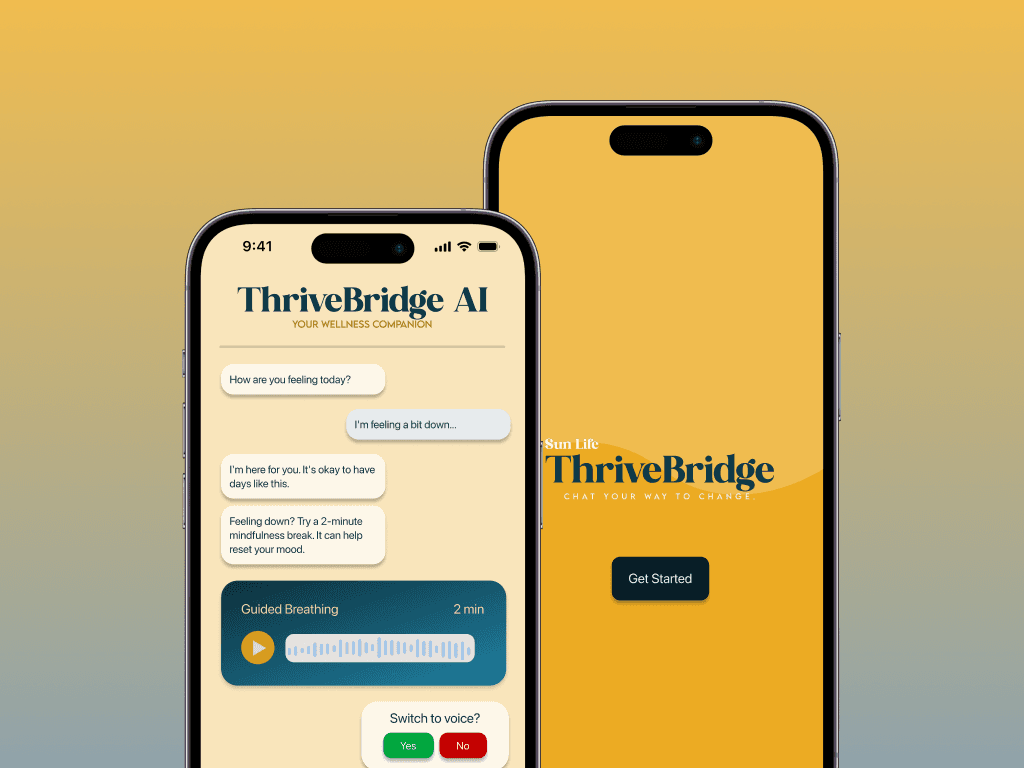
Instead of creating one application that treated every stage of chronic care the same, I divided the experience into two connected layers.
Layer 01
Layer 02
Design Decisions
Patients may experience cognitive overload after receiving a diagnosis.
Offer voice-guided setup alongside traditional tap-based onboarding.
Voice reduces interaction friction and makes onboarding feel conversational instead of clinical.
Patients should not be expected to follow health recommendations blindly.
Every AI suggestion explains why it appeared and provides a direct path to human support.
Transparent reasoning helps patients understand, question, and trust AI-assisted guidance.
Long-term behaviour change is difficult when patients feel isolated.
Create anonymous Thrive Circles where patients can learn from people facing similar challenges.
Peer support can reduce stigma and make long-term care feel less lonely.
Large health goals can create guilt when patients are already overwhelmed.
Break long-term behaviour change into achievable daily actions.
Celebrating small progress shifts motivation from guilt toward momentum.
The Final Experience
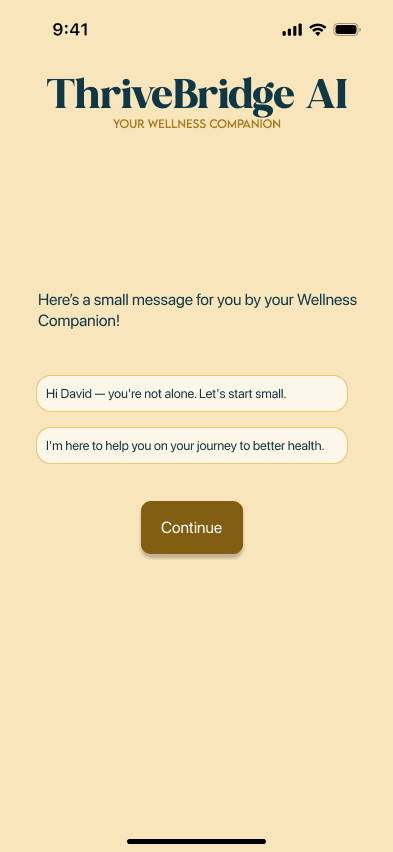
User goal
Begin the experience without feeling overwhelmed.Design rationale
Voice and tap-based options give patients greater control over how they begin.Expected outcome
Higher confidence and reduced onboarding friction.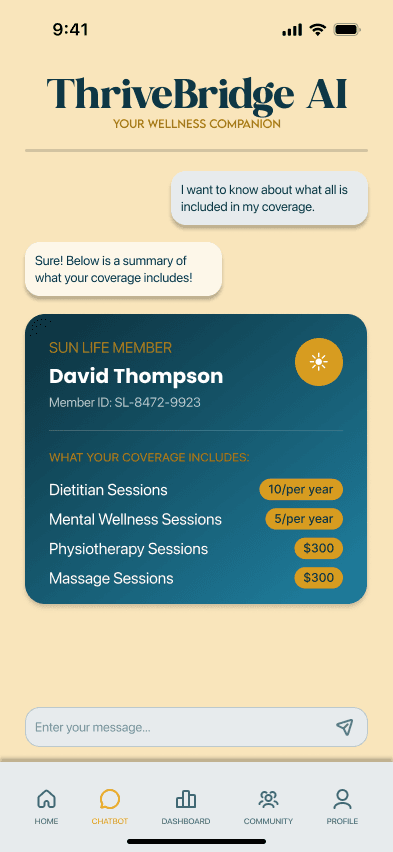
User goal
Understand which benefits and services are available.Design rationale
Complex insurance information is translated into clear, actionable guidance.Expected outcome
Increased benefit awareness and utilization.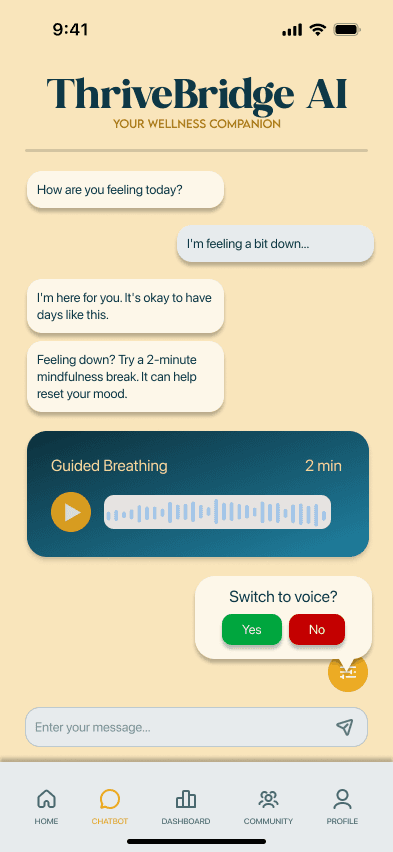
User goal
Receive relevant next steps without losing control.Design rationale
Recommendations include clear reasoning and access to human clarification.Expected outcome
More transparent and trustworthy AI support.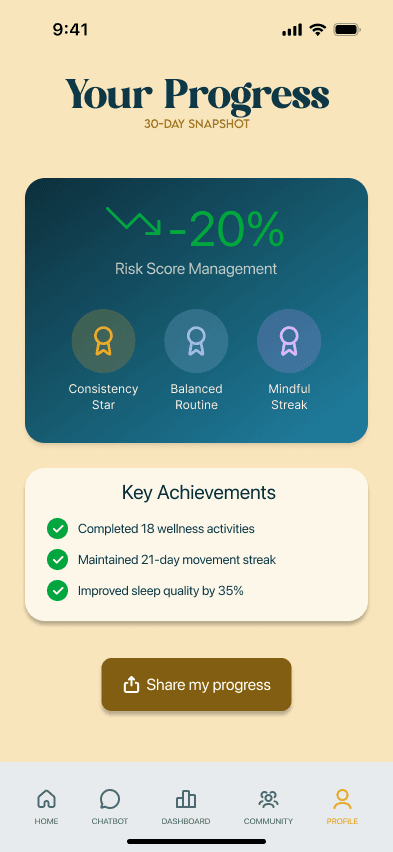
User goal
Build healthier behaviour without unrealistic pressure.Design rationale
Small actions are framed as meaningful progress rather than incomplete goals.Expected outcome
More sustainable long-term engagement.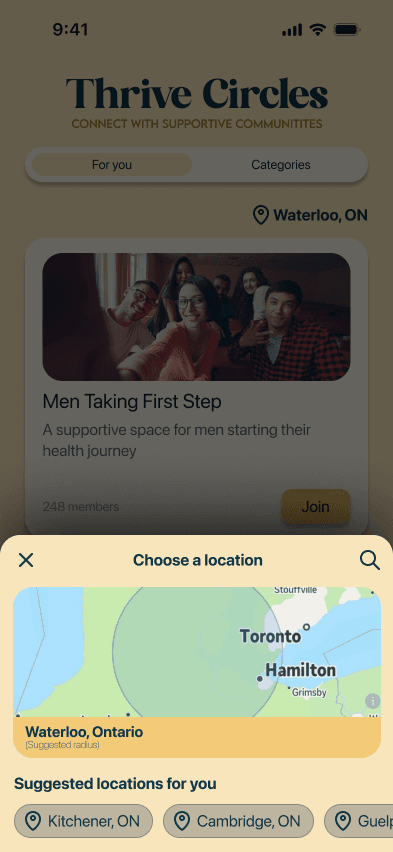
User goal
Feel understood by people experiencing similar challenges.Design rationale
Anonymous communities balance belonging with privacy and emotional safety.Expected outcome
Reduced isolation and stronger peer support.Measuring Success
User indicators
Healthcare and business indicators
A Deliberate Trade-off
Intentionally delayed
Prioritized first
Reflection
By the end, I understood it as an emotional-readiness problem. The project changed how I think about trust, AI, and the role of reassurance in healthcare experiences.
What I Would Validate Next
Closing Thought
They help people feel capable of taking the next step.
View More Projects